France and Saudi Arabia signed an agreement on August 24, 2026, for a €6 billion Saudi investment in three theme parks near Paris, a project presented by the French presidency as one of the largest recent leisure developments tied to the bilateral relationship.
The memorandum of understanding was signed during the visit to France by Saudi Crown Prince Mohammed bin Salman. According to the Elysee, the parks would be built near Cergy-Pontoise, roughly 30 kilometers northwest of Paris, and one of them is expected to be manga-themed. French President Emmanuel Macron called the announcement unprecedented and described the planned attractions as a new global destination, signaling that Paris sees the project not merely as a domestic tourism investment but as an internationally marketed destination cluster.
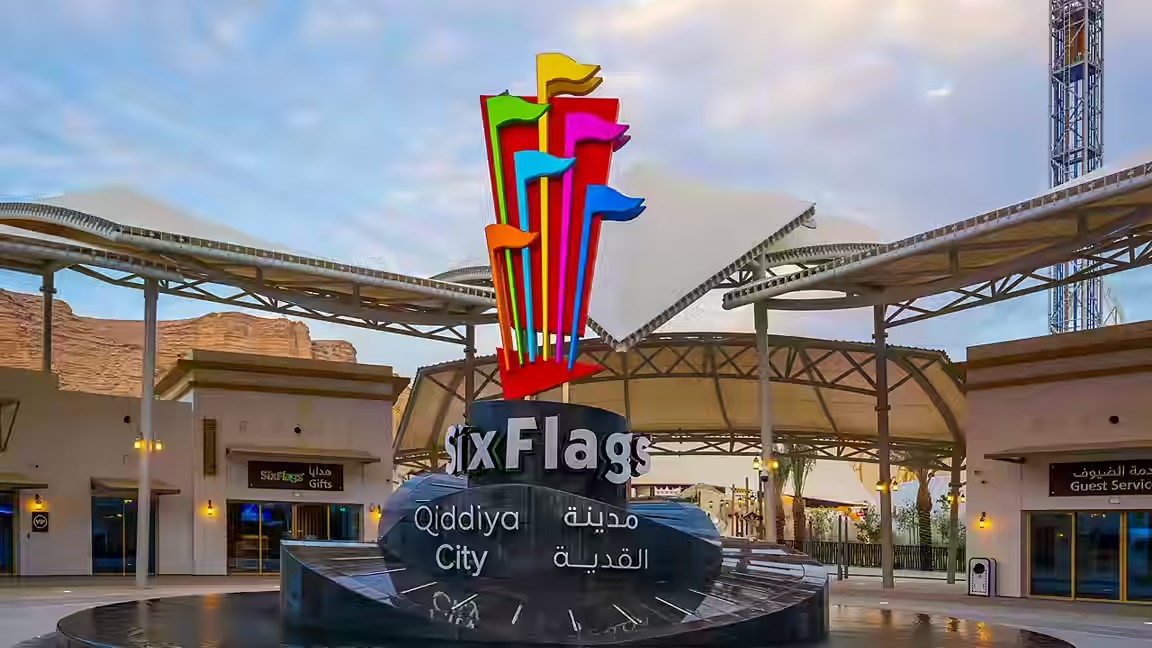
The project is to be led by Qiddiya, an investment company tied to Saudi Arabia’s sovereign wealth fund. French officials said the development could create around 22,000 direct jobs, a comparison point the presidency underlined by noting that Disneyland Paris supports about 20,000. That framing placed the proposed parks in the same conversation as Europe’s best-known destination resort and suggested that French officials regard the investment as economically significant even before construction timelines are finalized.
The Elysee said the project grew out of a December 2024 discussion in Riyadh between Macron and the crown prince, when advisers said the two men discovered a shared enthusiasm for manga and especially Dragon Ball Z. While earlier reports had circulated about a possible park connected to the franchise in the Val-d’Oise area, the presidency stopped short of officially branding the attraction as a Dragon Ball Z park. Instead, it confirmed only that one of the three parks is expected to be manga-themed, leaving the precise intellectual property and the identities of the other two parks undisclosed on the event date.
Construction is expected to unfold in stages over several years, and the presidency did not give an opening date. That leaves the agreement firmly in the project-development phase rather than the delivery phase, but the scale of the promised investment and the level of political sponsorship made it one of the most visible outcomes of the crown prince’s visit.
The announcement also arrived alongside criticism from media-freedom advocates and journalists’ unions over France’s reception of the Saudi leader. Those groups pointed to Saudi Arabia’s human rights record and the unresolved significance of the 2018 killing of journalist Jamal Khashoggi. The Elysee’s response was blunt: French officials said that when France attracts a project, it does not seek to lecture its partners. That answer showed the extent to which Paris was willing to separate commercial diplomacy from rights criticism in defending the theme-park investment.
On the event date, the project stood at the intersection of tourism strategy, industrial diplomacy and political controversy. What was clear was that France had secured a large Saudi commitment for three parks near Paris. What remained open were the detailed themes, the construction timetable and how the investment would be received over time amid the broader debate over France’s ties with Saudi Arabia.