Israeli strike hits Gaza hospital compound as ceasefire violation claims continue
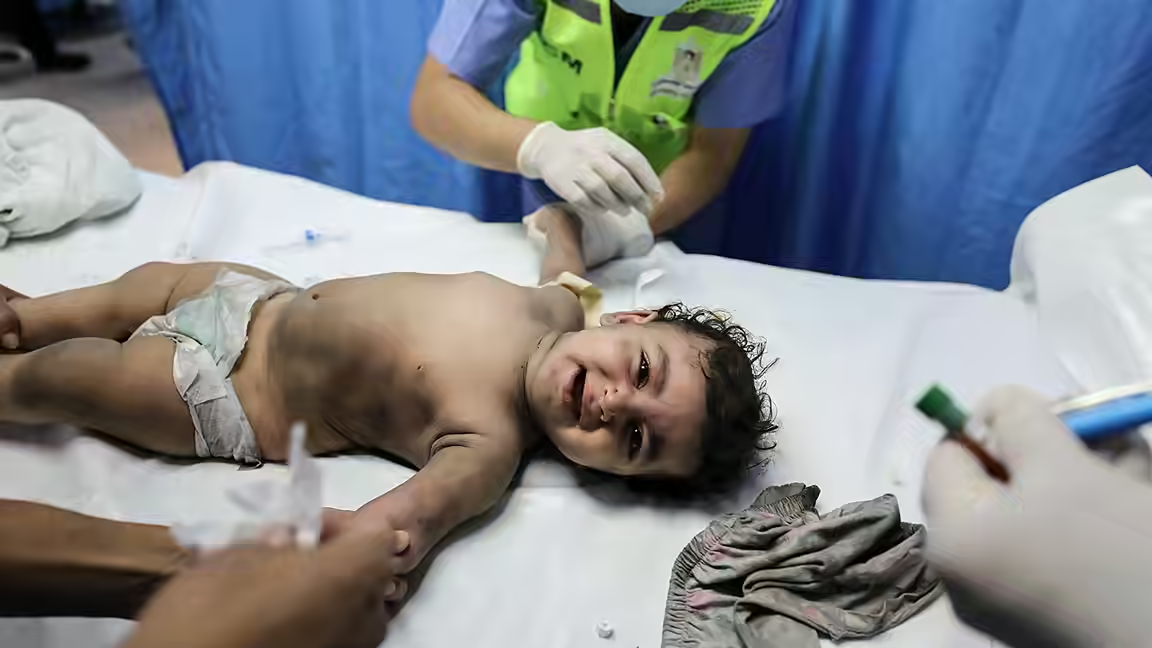
Israel struck the compound of Al-Aqsa Martyrs Hospital in central Gaza on Aug. 30, 2026, with Palestinian health officials reporting three deaths in separate attacks and accusing Israel of continuing to violate the U.S.-backed ceasefire, according to MENA via The New Arab.
The Israeli military said it was targeting a Hamas commander it claimed was hiding inside the hospital compound in Deir al-Balah. It did not immediately confirm whether the commander had been killed. The hospital said the strike landed near a warehouse close to the maternity ward, injuring three people there.
Elsewhere in Deir al-Balah, the hospital reported that one person was killed earlier in the day by Israeli fire in the eastern area of the city. In Gaza City, the civil defence agency said another Israeli strike near a roundabout in Tel al-Hawa killed two people and injured several others. The Israeli military said it was checking the reports.
The report says the strike is part of a wider pattern of violence despite the ceasefire that took effect in October 2025. According to the Palestinian territory’s health ministry, Israeli operations since that truce began have killed at least 1,313 people in Gaza.
That figure matters because it suggests the ceasefire has not ended the war’s deadliest dynamics. Israel says it continues to target militants it accuses of operating from civilian areas, while Palestinians and humanitarian groups say the strikes have kept hitting places meant to provide protection, including hospitals and shelters.
Al-Aqsa Martyrs Hospital has repeatedly been at the center of Gaza’s conflict because of its location in a densely populated area and its role as a medical hub for central Gaza. Any attack on or near the compound raises immediate concerns about patient safety, particularly in and around the maternity ward where people were reportedly wounded.
The report does not provide independent battlefield verification of Israel’s claim about the commander or the exact circumstances of the deaths and injuries. It does, however, show how fragile the ceasefire remains in practice: even after the truce was announced, lethal strikes have continued, and both sides continue to issue conflicting accounts about military necessity and civilian harm.
For families in Gaza, the argument over ceasefire violations is not abstract. It is measured in hospital corridors, damaged wards and new casualties. And for the international community, the episode is another reminder that ceasefire language alone has not been enough to stop the violence from spilling into civilian spaces.