King Haakon VIII has sworn allegiance to Norway’s constitution in the Storting in Oslo, taking the first major institutional step in his reign after succeeding his father Harald V.
The ceremony on 2026-09-01 marked the point at which the new monarch formally committed himself to govern in line with Norway’s constitution and laws. The oath was taken in parliament rather than at a ceremonial palace setting, underscoring the constitutional role of the monarchy in a country where elected institutions hold the real political power.
The change on the throne follows Harald V’s death last week. According to the supplied report, the late king’s coffin had been moved to the chapel of the royal palace a day earlier, where it will remain for the public to pay their last respects before a funeral on September 9. That sequence places the oath within a broader period of national mourning and transition.
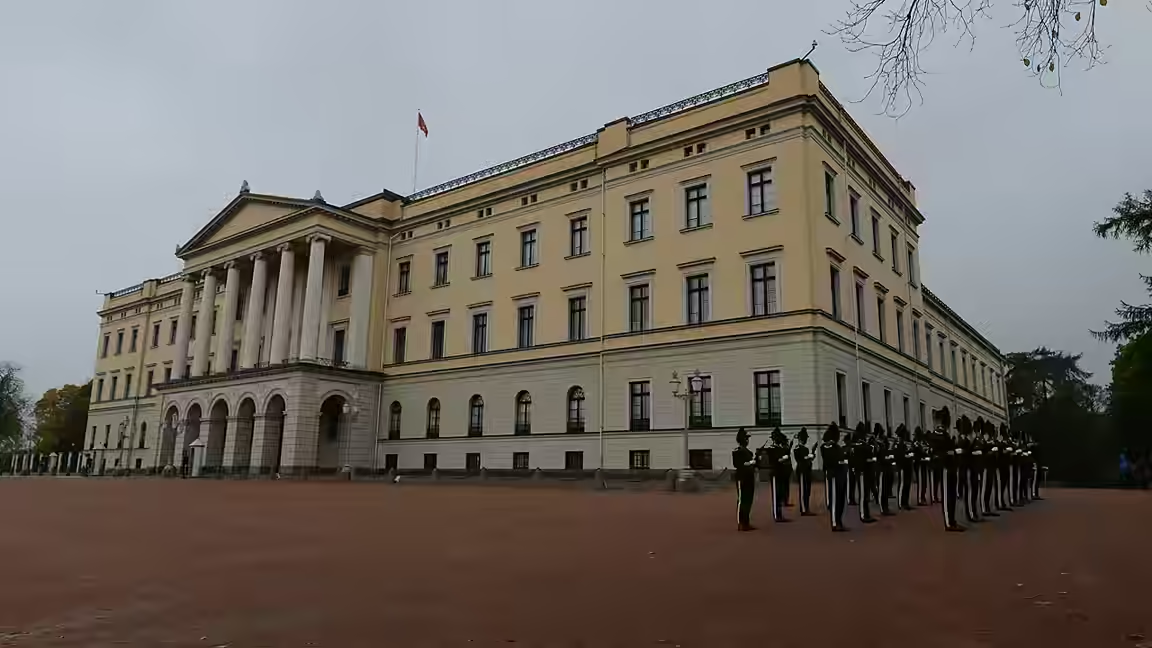
The Storting ceremony also highlighted the practical logistics around the succession. Haakon was driven the short distance from the royal palace to parliament, and House speaker Masud Gharahkhani read the official announcement of Harald’s death and Haakon’s accession before the oath. The event was presented as the constitutional confirmation of a transition that had already taken effect on the king’s death.
Queen Mette-Marit did not attend. The palace said she was recovering after a lung transplant in June and had experienced complications. Her absence meant the event proceeded without the queen at the new monarch’s side, even as the royal household managed both the accession and the funeral arrangements for the former king.
The report places the day in the context of Norway’s long constitutional tradition. The royal family’s roots go back to the ninth century, but the modern monarchy dates to 1905, when Norway regained independence from Sweden and voters backed the restoration of a largely symbolic constitutional monarchy. In that system, the royals retain diplomatic and representative functions while government authority remains with parliament and the elected cabinet.
For Norway, the oath was therefore not a transfer of executive power but the formal public start of a new reign. It signaled continuity in the royal institution and continuity in the state itself, even as the country entered a new phase after Harald V’s death. The next major date in that transition is the funeral on September 9, which will close the immediate mourning period.
The ceremony’s importance lies in its constitutional clarity. Haakon VIII did not simply become king when his father died; he publicly affirmed the monarch’s duties in front of parliament, placing the succession on the record in the place where Norway’s democratic authority is exercised.