Iranian officials and state-linked media said a US strike hit a home used for a wedding celebration in Kuhestak, in Hormozgan province, killing five people and wounding 63 others on the event date, 2026-09-01.
The account came through Al Jazeera’s reporting from Iranian statements. Esmaeil Baghaei, spokesman for Iran’s Ministry of Foreign Affairs, called the attack “brutal” and said it struck a residence in the southern county of Sirik early on Wednesday. Iran’s Press TV reported at least five people killed, including a child, while Hossein Kermanpour, an official at Iran’s Ministry of Health, said on X that “the martyrs include a child” and that electricity and telephone lines had been cut.
The casualty count was later expanded by Reza Shahidiyan, the governor of Sirik county, who told state broadcaster IRIB that 63 people had been wounded. He said 50 of the victims were women and children and that all of the injured had been taken to a hospital in nearby Minab. Shahidiyan said they were in stable condition.
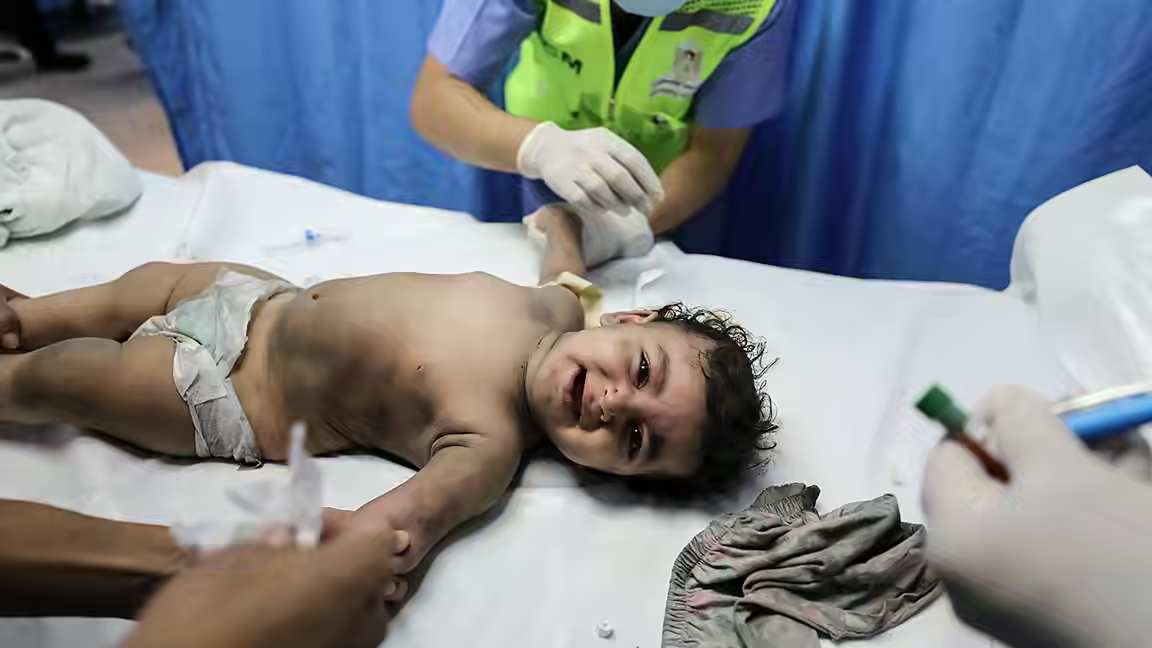
The packet also includes visual and witness material supplied by Iranian outlets. The Iranian Red Crescent Society released footage showing a building with walls and windows blown out and debris scattered on the ground. It also published images of children receiving treatment in hospital. Separately, the semi-official Fars news agency carried a video of a child survivor who said he heard fighter jets before arriving at the venue and then described a very strong blast that threw bricks, stones and cement into people’s faces and heads.
That testimony and the Red Crescent imagery support the basic outline of the Iranian claim: a civilian gathering was struck, and the aftermath involved a significant number of casualties. The packet, however, contains only Iranian-side reporting and does not provide an independent military assessment or confirmation from the United States. As a result, the event should be treated carefully as an accusation under conditions of active conflict, not as a fully verified battlefield account.
The US military was separately reported to have announced a new wave of strikes against Iranian military targets, saying the action followed attempted attacks by the Islamic Revolutionary Guard Corps against commercial shipping in the Strait of Hormuz. According to the same reporting, the US said it had hit air defence sites, radar systems, maritime assets, mine-laying capabilities and communications sites.
Iranian officials linked the Kuhestak strike to a wider series of incidents and said explosions were reported in other coastal cities, including Konarak, Bandar Abbas, Jask, Asaluyeh and Ahvaz, as well as Qeshm Island. Those reports were attributed to the semi-official Tasnim news agency.
Baghaei used the allegations to call for international action, saying silence from governments and institutions would amount to justification for what he described as barbarism. He also said Iran would respond firmly.
The evidence in the packet supports a narrow but important conclusion: Iranian officials are accusing the US of causing civilian deaths during a wedding gathering, and local authorities say the wounded were moved to hospital. What it does not support is a final determination on target selection, intent, or the full scope of any broader strike package. In a fast-moving conflict, that distinction is critical. For now, the official Iranian account is the central fact pattern, and the missing piece is independent verification from outside the parties to the conflict.