# Iran says U.S. strikes hit wedding party in Kuhestak, killing at least four
Iran said a U.S. strike hit a house during a wedding celebration in the southern county of Sirik on the event date, September 1, 2026, killing at least four people and wounding more than 50 others, in an episode that quickly became part of the wider confrontation over American attacks on Iranian military targets.
According to Al Jazeera’s report, Iranian officials said the attack struck the city of Kuhestak early on Wednesday. Esmaeil Baghaei, spokesman for Iran’s Ministry of Foreign Affairs, described it as a “brutal” assault and called it a war crime. The report said the dead included two children, while the wounded included women and children.
The account places the incident inside a broader military campaign. The U.S. military had announced a new wave of strikes against what it called Iranian military targets, saying the operation followed attempted attacks by Iran’s Islamic Revolutionary Guard Corps against commercial shipping in the Strait of Hormuz. In that statement, the U.S. said it had struck Iranian air defense sites, radar systems, maritime assets and facilities, mine-laying capabilities and communications sites.
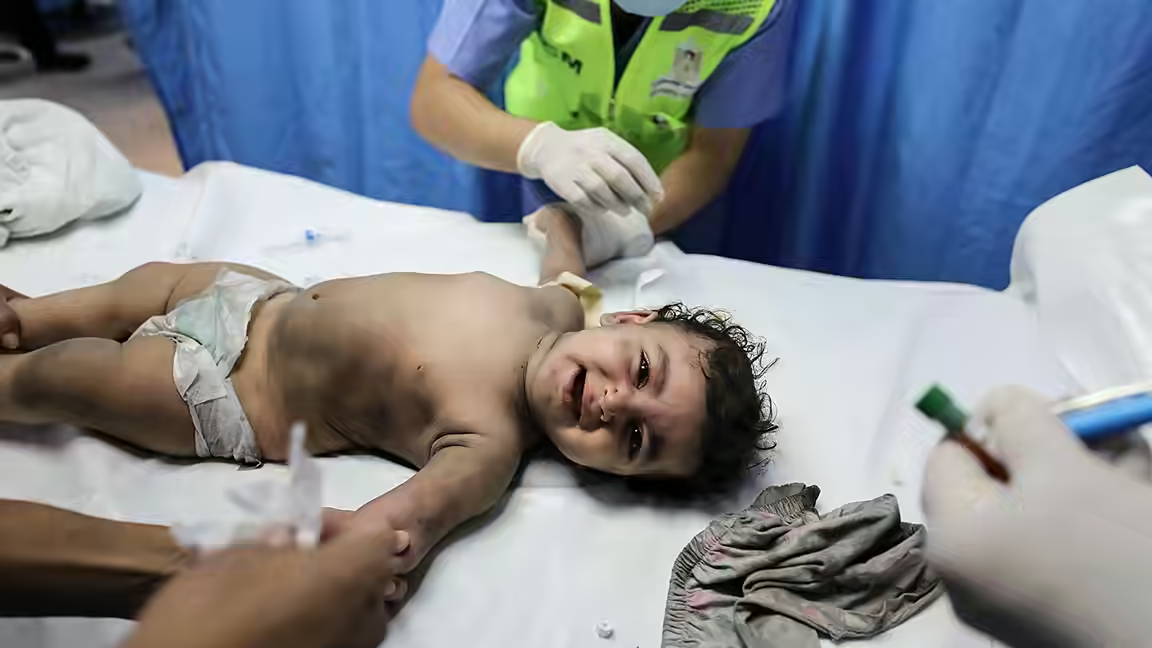
Iran’s version of events focused on civilian harm. The Iranian Red Crescent Society released footage showing a building with blown-out walls and windows and debris scattered around the site. It also published images of children receiving treatment in hospital. The Red Crescent said the location had the reported character of a family wedding venue and argued that the incident raised serious concerns under international humanitarian law.
The organization said it had sent a letter to the International Criminal Court calling for legal action after the missile attack in southern Sirik. Reza Shahidiyan, the governor of Sirik county, told Iran’s IRIB state broadcaster that all of the wounded were taken to a hospital in the nearby city of Minab and were in stable condition.
The report also included a witness account from a child who survived the blast and said fighter jets were heard before the explosion. He described bricks, stones and cement hitting him in the face and head and said the people at the event were ordinary civilians. That detail reinforced the picture Iranian officials were trying to present: not a military site, but a family gathering caught up in an attack.
Iranian parliamentary leaders responded with unusually sharp language. Mohammad Bagher Ghalibaf, the speaker of parliament, criticized Washington and said that if a power acted, picked targets and killed like Satan, it was Satan. His remarks show how quickly the strike became folded into Tehran’s political response to the wider conflict.
The event came amid growing tension over the Strait of Hormuz, a strategic waterway where Iran has already blocked shipping since the start of the war with the United States and Israel on February 28, according to the Al Jazeera report. The same report said Iran’s military retaliated by attacking U.S. bases and assets in Jordan, Bahrain and Iraq, while Kuwait reported intercepting drones and missiles.
The Gulf Cooperation Council also condemned the Iranian attacks, calling them a flagrant violation of the sovereignty of those states and a direct threat to their security and stability. That reaction shows the regional spread of the conflict beyond the immediate strikes in Iran.
What can be verified from the supplied evidence is narrower than the rhetoric around it: Iranian officials said a wedding party in Kuhestak was hit, at least four people were killed, more than 50 were wounded, and both sides were already trading attacks in a larger military confrontation. The source does not settle every disputed fact, but it does show how civilian casualties in a wedding venue became a new flashpoint in a rapidly escalating war.