Re-entry confirmed over Indonesia
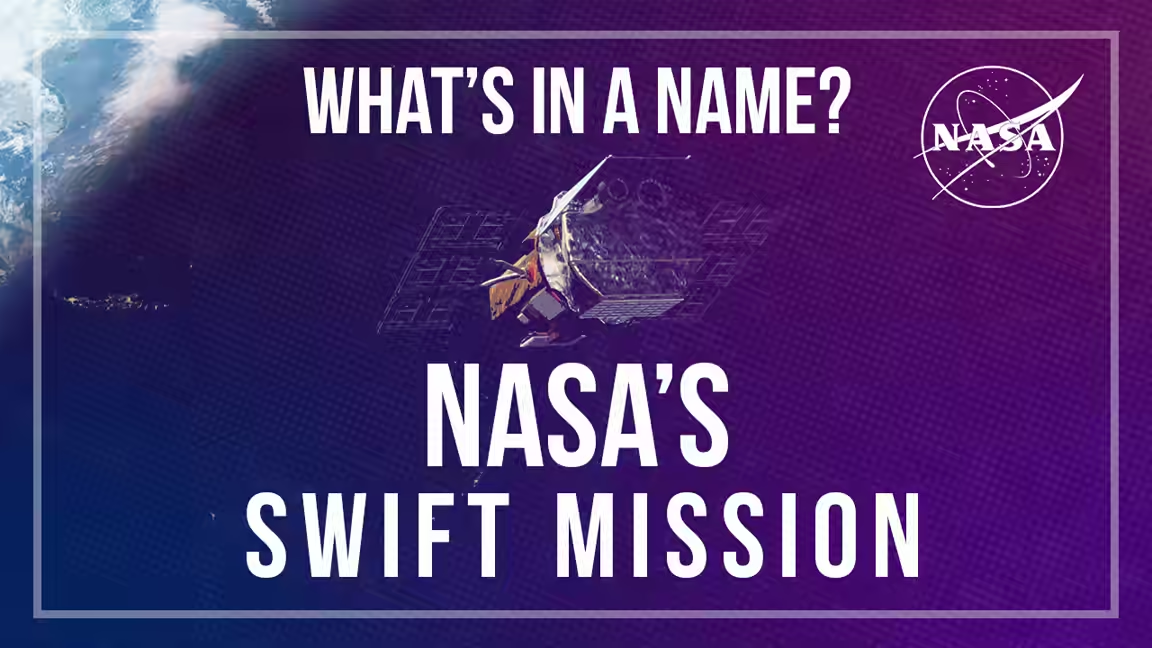
NASA's Neil Gehrels Swift Observatory re-entered Earth's atmosphere on November 4, ending a science mission that lasted almost 22 years. The US Space Force placed the re-entry at 7:39 a.m. Eastern time over the North Sumatra region of Indonesia, near 3.4 degrees north latitude and 98.6 degrees east longitude.
NASA expected most of the spacecraft to burn up during its descent, although the agency said some components may have survived. Its confirmation closed a mission that began with a 2004 launch and had originally been designed for a two-year prime operating period.
Swift was created to investigate gamma-ray bursts, among the most energetic explosions known in the universe. Its defining capability was not only observing those short-lived events with three telescopes, but also turning rapidly toward a target and notifying other observatories so they could conduct follow-up work. That combination made the spacecraft a coordinator as well as an observer.
A wider scientific role
Over more than two decades, the observatory's work extended beyond its initial focus. NASA says Swift examined active galaxies powered by supermassive black holes, X-ray flares from stars, supernova explosions and objects closer to Earth, including comets and asteroids. Its ability to observe different wavelengths allowed scientists to study a changing source through several kinds of light.
The spacecraft's rapid response was especially valuable because transient astronomical events can fade quickly. By distributing alerts, Swift enabled other facilities to direct instruments toward the same location while an outburst was still observable. That operating model helped connect measurements made from space and the ground rather than leaving each telescope to work in isolation.
The end came through orbital decay and atmospheric re-entry, not a planned recovery. NASA's update said Swift had already far exceeded the lifetime envisioned for its prime mission. The observatory's longevity allowed the same platform to contribute across successive generations of instruments and researchers.
Swift's conclusion removes a long-running tool from the network used to identify and study sudden cosmic events. Its record nevertheless demonstrates the value of an observatory designed around speed, flexibility and coordination. A mission intended to last two years remained scientifically useful for nearly 22, broadening its target list while retaining the fast-response role at the center of its original design.
The re-entry marks the physical end of the spacecraft, while the observations and alerts gathered during its extended mission remain available for continued scientific analysis.